Trauma-Informed Pedagogy for Modern Music.

Music Bridge recognizes the powerful therapeutic benefits of music education, such as improved emotional regulation, cognitive development, and social skills.
Join Our Mailing List
Thank you! Your submission has been received!
Oops! Something went wrong while submitting the form.
We won’t share your data with third parties. Ever.
Human-Centered
Applying neuroscience and pedagogy into actionable teaching practices
Reconnection
Collaborative music-making fosters trust, belonging, and social engagement, strengthening students’ connection to themselves and to others.
Resilence
Through consistent creative practice and supportive relationships, students build the capacity to adapt, recover, and grow through challenge.
Regulation
Music-based experiences support nervous system balance, helping students manage energy, attention, and emotional states.
Where Music Supports Whole-Child Development
Music education plays a critical role in a young person’s development, shaping not only musical skill but also emotional regulation, cognitive growth, and social connection.

In recent years, modern music education has expanded beyond traditional models that emphasize technical proficiency alone, embracing a more holistic approach that recognizes the whole child. This shift is informed by trauma-informed pedagogy, the Neurosequential Model of Education, and Polyvagal Theory.
Music as a Catalyst for Academic, Emotional, and Social Growth
Research demonstrates that music has a unique ability to activate the nervous system’s social engagement pathway, promoting a sense of safety, calm, and connection. Because of this, music is widely used as a therapeutic tool for individuals who have experienced trauma or who struggle with emotional regulation.

Through music-making, students can practice self-regulation, strengthen interpersonal skills, and build meaningful connections with others in a supportive environment.
Explore IMPACT
A framework for nervous system aware music learning
At Music Bridge, these principles are applied through the Regulation Diamond, a framework inspired by Dr. Bruce Perry’s Neurosequential Model and Dr. Stephen Porges’ Polyvagal Theory.

The Regulation Diamond maps key nervous system states to specific music activities designed for energy release, co-regulation, learning, and creative stimulation. This approach positions music education as an essential vehicle for emotional, cognitive, and social development—not simply artistic training.
Expanding the Impact of Music Beyond the Arts
By integrating neuroscience and trauma-informed research into modern music pedagogy, Music Bridge creates learning environments that intentionally connect brain, body, and sound. Through music, students are supported in navigating emotions, building resilience, and fostering authentic human connection—laying the foundation for lifelong growth both inside and beyond the classroom.
Explore Professional Development
Holistic Paradigm
Community
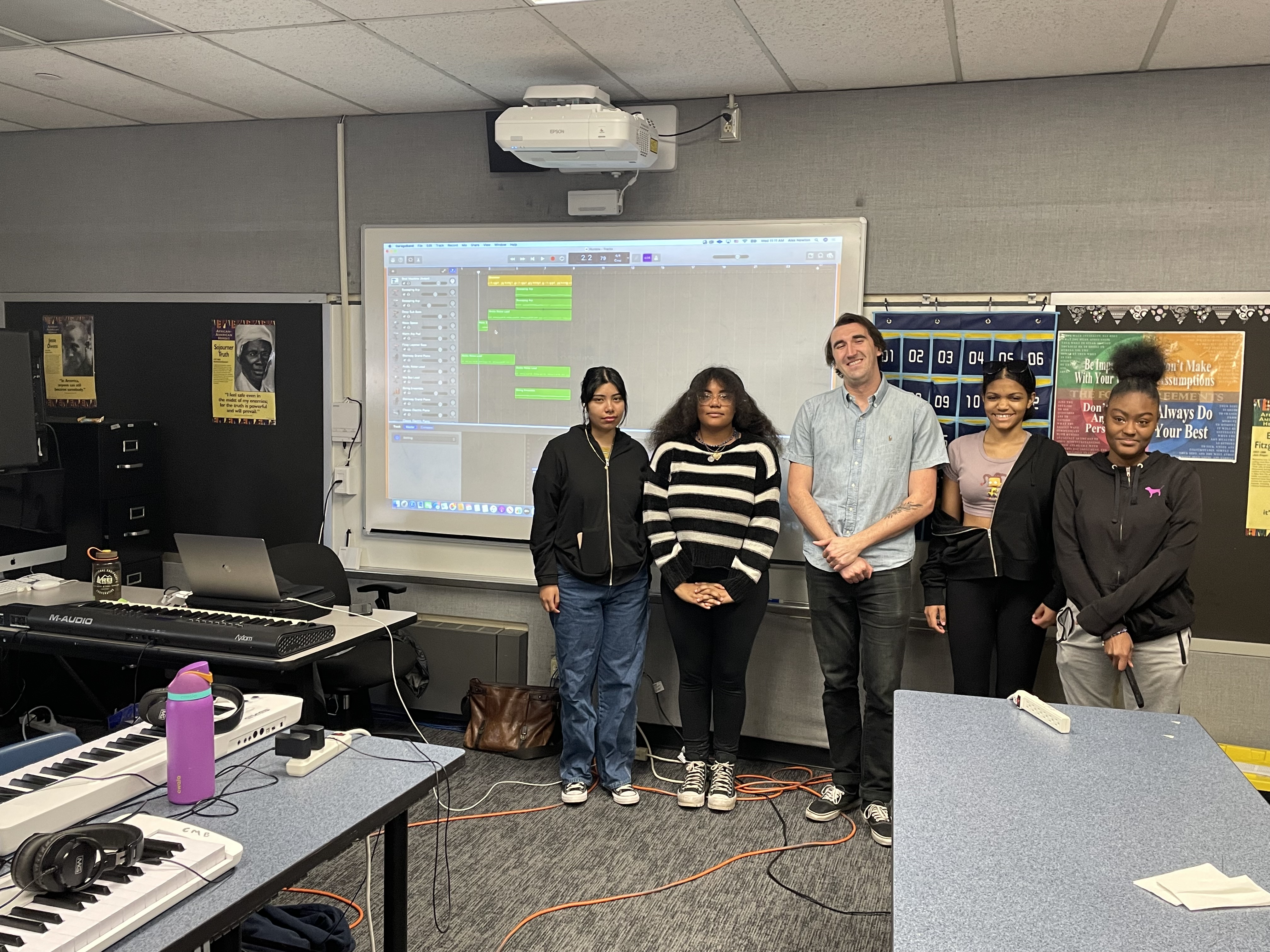
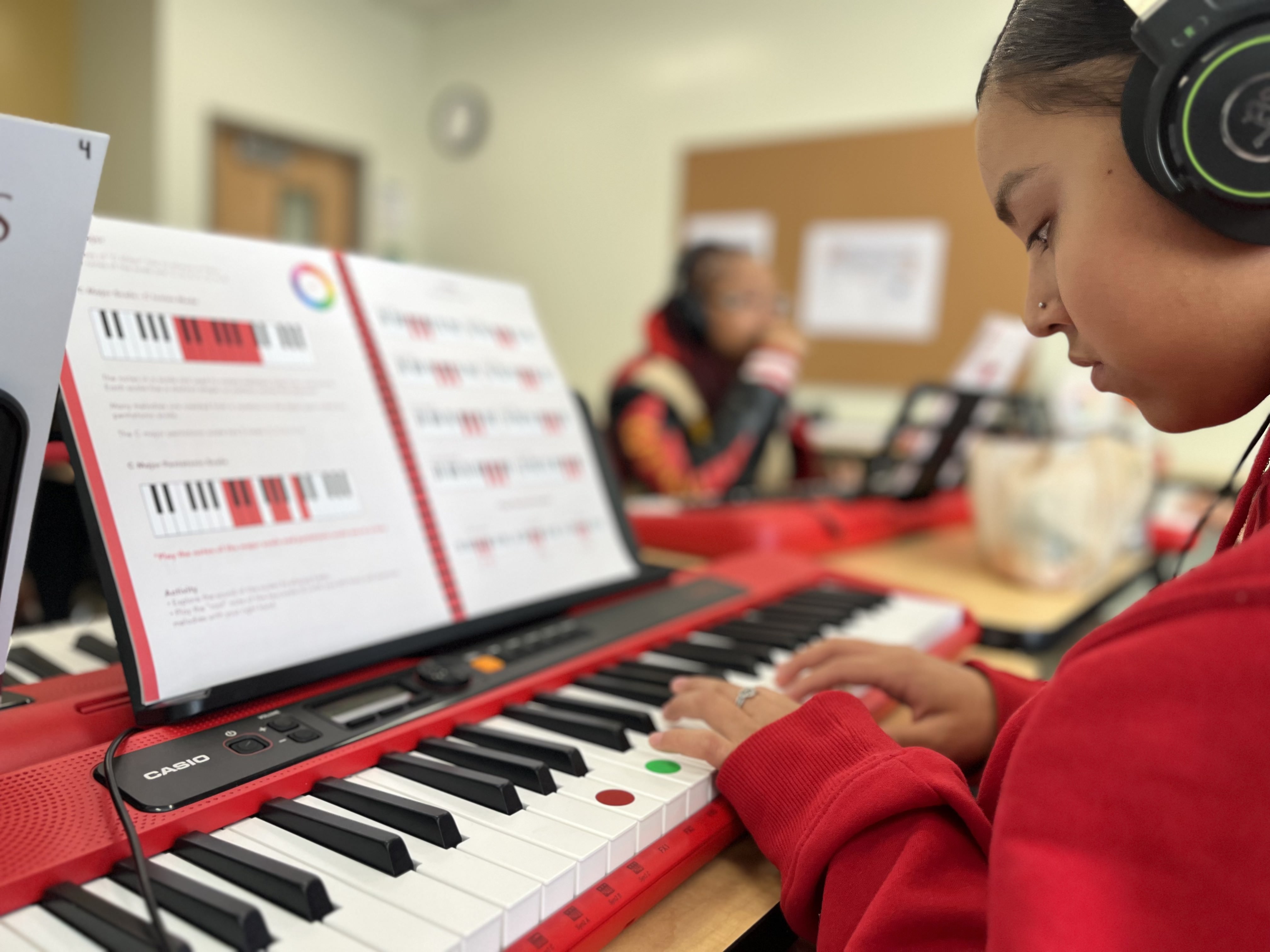
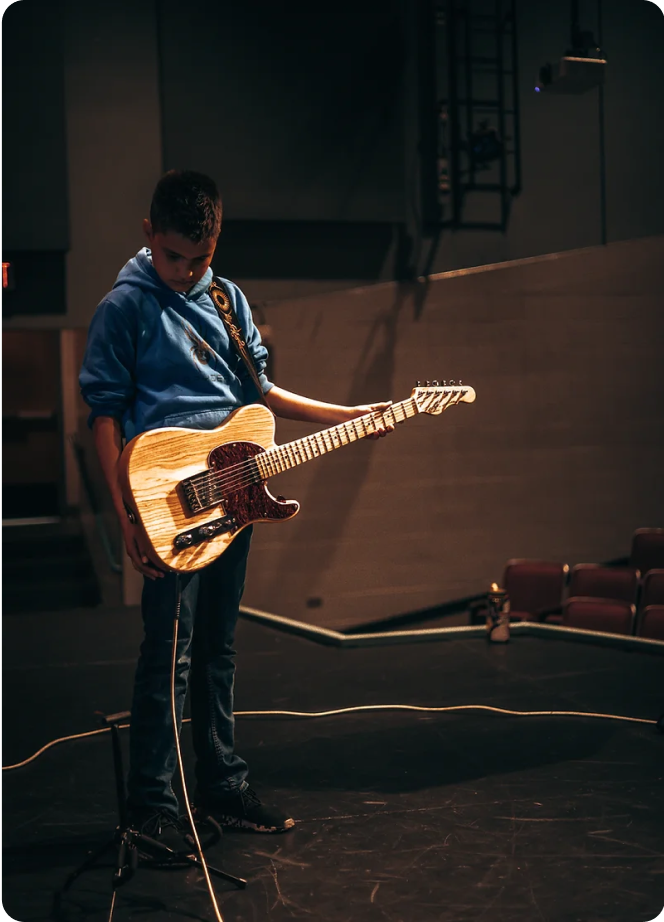
Music Bridge provides Modern Music classes with a community-responsive curriculum utilizing keyboard, electric guitar/bass, voice, drums/percussion, and applications such as songwriting, recording, and beat-making.
About Us
About Us
Culture
We help students cultivate their unique artistic collage for an active musical life as amateurs or professionals.
Explore Technology
Explore Technology
Insights
Accessible Resources
Chevron down icon
Our UDL-inspired music curriculum is effective for students with a wider range of backgrounds and learning styles (visual learners, auditory learners, those with learning disabilities) as compared to traditional models that require sight-reading notation and pre-requisite knowledge for instrumental performance.
Contact us
Contact us
Standards-Based Curriculum
Chevron down icon
Our research-based pedagogy aligns with national standards and engages students in multiple modalities:

1) self-led exploration and challenge-by-choice,
2) sequential, scaffolded skill-building and creative practices, and
3) peer collaboration and sharing that builds pro-social involvement.
Contact us
Contact us
Dedicated Teaching Artists
Chevron down icon
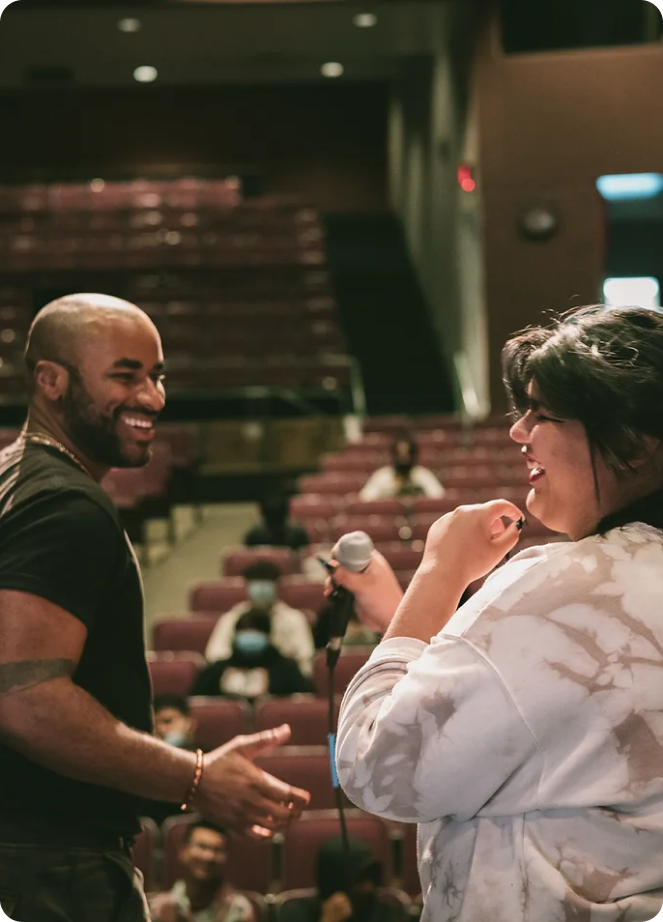
Music Bridge teaching artists live and work in the communities served, and act as positive role models and community leaders for their students.
Contact us
Contact us
All ages
Chevron down icon
High School: IMPACT Program
Middle School: IMPACT Program
5th grade: Introduction to Modern Music
Elementary School: Vocal and Percussion classes
Contact us
Contact us
Type of Programs
Chevron down icon
Semester or School Year
Quarter (8-10 weeks)
One-time Performance/Presentation/Masterclass
Summer Sessions
Contact us
Contact us
Our Funding and Community Partners